DeployCo: When factories become a service
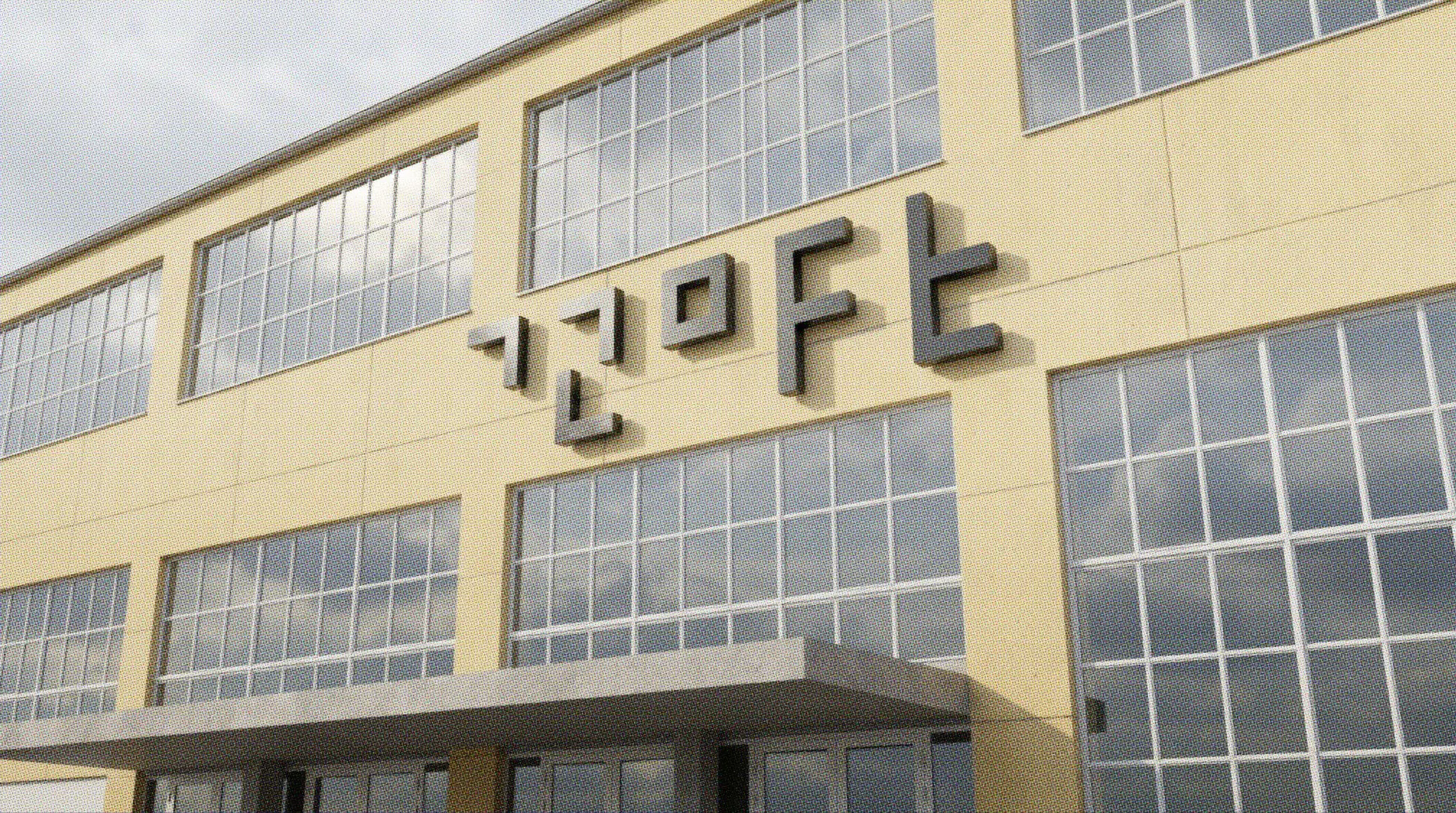
Production capacity arrives on a truck.
The next big infrastructure business in AI will arrive on the back of a truck. Inside is a working production line: robots, tools, inspection equipment and the software that runs them. We set it down in a parking lot near a brand’s customers, plug it into power and feed it parts, and it starts making products.
Physical AI will be won by whoever can add production capacity fastest. The demand is already there. Manufacturing has held at about 15.6% of world GDP for ten years, and almost everything else in the economy either feeds it or sells what it makes. A robot only adds to that number when it ships a finished product. Finished products are also what a brand wants from us: its own product, made close to where it is sold, with no factory of its own to buy or run. So the question we care about is how you get robots onto a floor where they can contribute, and how fast you can add the next floor when the orders come.
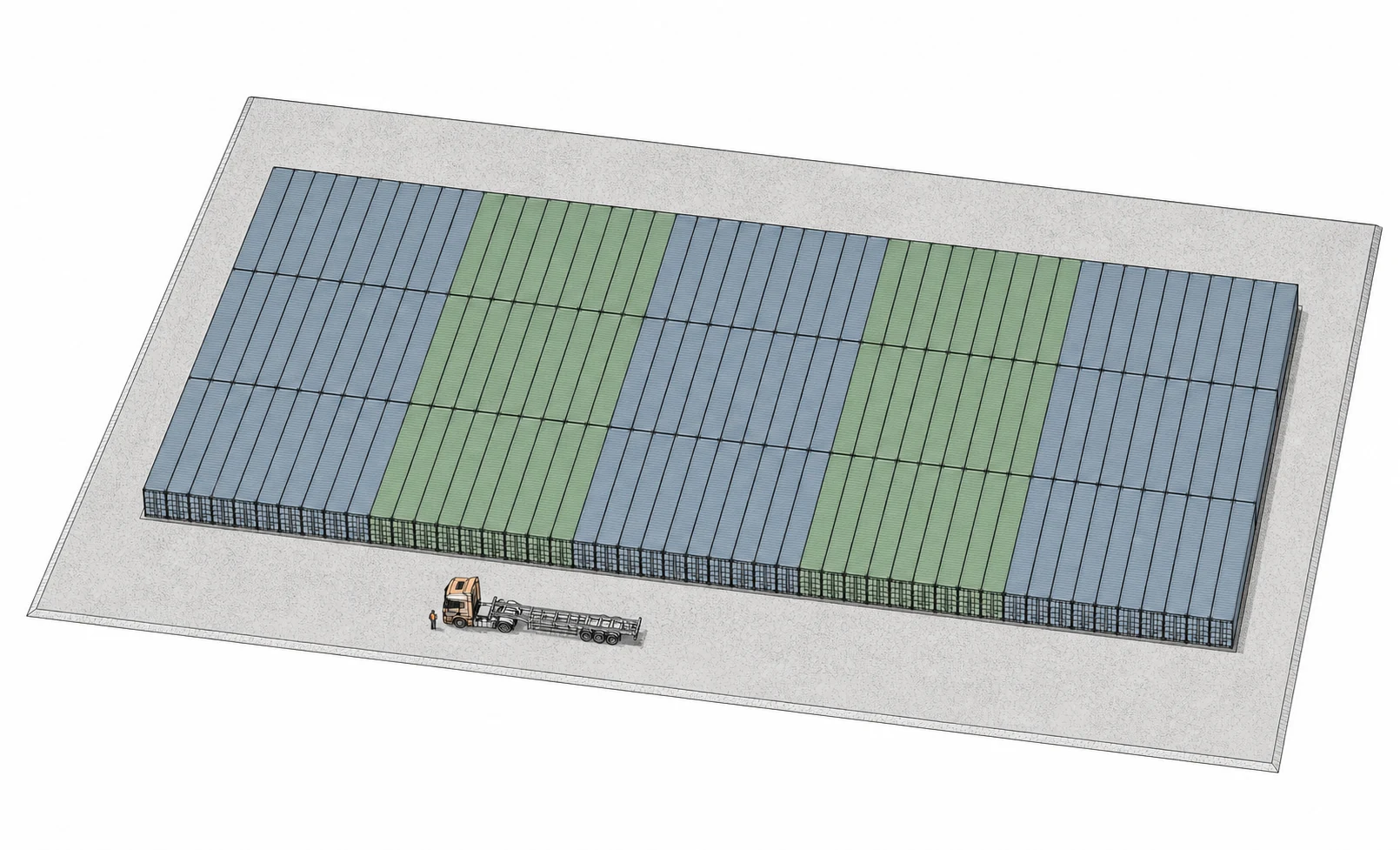
A humanoid in a human factory loses.
Most of the industry is trying to put humanoids into factories that already exist. The reason is sound, because that is where the work is today. We have studied what that costs. In the brownfield lines we studied it takes three humanoids to match the speed of one person, and up to five times the floor space to make the cell safe with cages, safe zones and charging.
An existing line is laid out for human reach, human pace and human aisles, and the robot inherits every one of those decisions. Amber Yang of Lightspeed calls the companies that put robots to work DeployCos, and we agree with her that this is where the value goes. But a company that deploys into other people's buildings carries the brownfield penalty on every job. And a company that redesigns every installation from scratch stays an engineering consultancy with robots. Its revenue grows only as fast as it can hire specialists.
It has happened before. In the 1890s factories swapped their steam engines for electric motors and kept the building, and productivity hardly moved for a generation. The gains came when they rebuilt the factory around the motor.
Build the room around the robot.
So we change the building. We are a DeployCo whose deployments are factories. Where others put robots to work inside a customer's plant, we put up the whole factory, own it and run it. A brand never buys a robot from us and has no line of its own to rebuild. It sends us the design and buys finished goods, priced per unit.
Our Factory is three 40-foot shipping containers, 120 feet end to end. One unpacks incoming parts, one assembles, and one inspects and packs. Unitree humanoids work the line, and nothing in it is laid out for a person.
That changes the maths twice. The space penalty goes, because cages and safe zones are there to protect people, and no one stands next to the robot while the line runs. And the line runs around the clock. A human line works one shift. Ours works three, so a robot needs only a third of a person’s speed to match a person’s daily output.
The three-to-one gap that sinks a humanoid on a human line is the gap a 24-hour line closes. We expect cost parity to arrive before speed parity. Our model puts the crossover with a human line in 2028. After that, every hour of uptime, every point of first-pass yield and every second off the cycle time makes each finished good cheaper, on a line that is already paid for.
A standard factory is also something a bank can finance. Fifty identical lines with per-unit revenue are an asset pool; fifty custom installations are fifty engineering projects.
Factories that ship like data centres.
Once the factory is designed around the robot, the race is about how fast you can put up the next one. Data centres have been through this. NVIDIA's DSX POD design, shown in Berlin on 21 October, puts a complete AI factory into containers that are cabled, piped and tested before they ship. NVIDIA says deployment drops from six months to as little as 14 days at a prepared site.
Factories have to be built the same way: from standard components, moved on a truck, and running within weeks of arriving. The business works like a data centre as well. A company that needs compute rents it from an operator who owns the data centre, and a brand that needs its product made buys finished goods from us. We own the Factories and run them. A brand starts with a small batch from one of them, and when its orders grow we add the next. We put them in the cities where its customers are, instead of in one industrial zone on the other side of the world.
It also decides how a DeployCo grows. A deployment inside a customer's plant starts with engineers learning that plant, and the next customer's plant is different again. Our model is to repeat the Factory at Frihamnen from the same drawings and software, so the production environment does not have to be learned from scratch at every location.
The parts get better without us.
There is one more reason to build the factories, and to keep them. Everything inside them improves every month, and somebody else pays for it. The owner of the factory is the one who collects. A better model goes into lines that are already paid for, and each new line costs less to build than the one before.
This autumn OpenAI dissolved its stand-alone robotics team after its general model turned out to run robots directly. NVIDIA released GR00T 2 as an open model for small-part assembly. Anthropic published a standard for AI agents to operate physical devices. Goldman Sachs reported that humanoid build costs fell about 40% in a year.
A company that already ships products gains twice from that. The work it does today gets cheaper, and work that was too expensive to automate comes within reach.
What we sell matters here too. A robot rented out by the month is priced against the wage of the person it replaces. Our price is measured against something larger, the cost of having the product made far away and shipped, and labour is only one part of that.
Capability flows down.
All of it flows down into our finished products. We adopt better robots and models. Our recipes, training data and production know-how stay with us. That is compounding deployment value.
What comes next.
The factories left and the knowledge followed. Most of what we own is now assembled so far from where it is sold that nobody at the brand has stood next to the line. That distance is what we are against.
A factory that fits on a truck can go back to where the customers are. A brand in Stockholm can have its product assembled in Stockholm, in small batches, and pay per finished unit. Do that in enough places and a city can make its own things again, without waiting on a supply chain it cannot see. We call it Made in Here.
The first one is running: Stockholm 001, at Frihamnen, in the old Ford factory. The plan is 15,000 Factories and 120,000 robots in eight years, each built the same way and each better than the one before, because the parts inside keep improving.
If you run a hardware brand and want your product made where it is sold, send it to us.
/ Martin
Sources
- UN SDG Report 2026, Goal 9: manufacturing share of GDP
- Paul A. David, "The Dynamo and the Computer", American Economic Review, 1990
- NVIDIA: DSX POD announcement, 21 Oct 2026
- Fortune, 13 Nov 2026: OpenAI disbands robotics team
- NVIDIA GR00T 2 at CoRL, via Let's Data Science
- Anthropic: Model Hardware Standard research preview
- Forbes, 5 Nov 2026: The robot revolution needs an industrial base to match
- Amber Yang whiteboard session (video)